Gentle Giants of Our Forests
Black bears are one of the most exciting and sometimes misunderstood wild neighbors in our region. Sightings in and around DuPont State Recreational Forest have become more common in recent years, but these animals are typically shy and prefer to avoid people whenever possible. With powerful senses and surprising agility, they move quietly through the forest, often long gone before we know they were there.
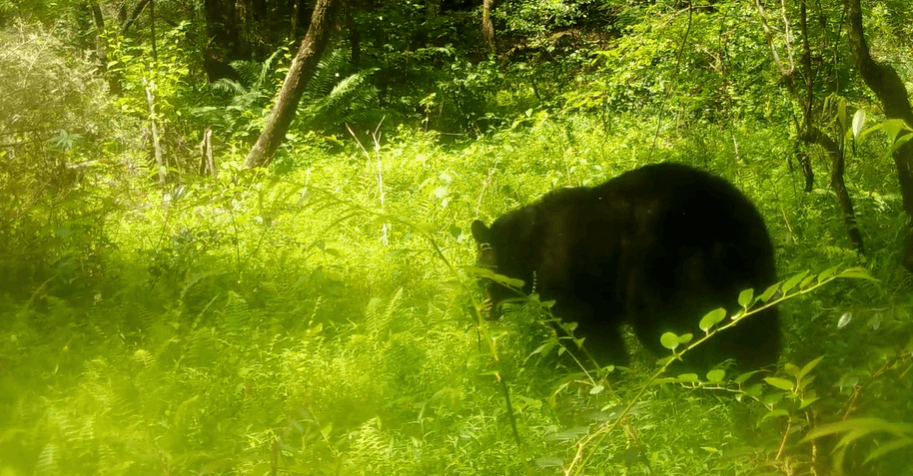

A Glimpse of a Black Bear
Solitary and self-reliant, black bears move quietly through the forest,
powerful yet elusive, rarely seen but always present.
Built for Life in the Forest
Black bears spend most of their time in wooded habitats and are excellent tree climbers, using height for safety, rest, and food. They also like to forage in open areas where soft mast foods such as blackberries and blueberries are abundant.
Despite their name, black bears are not always black. Their coats can range from deep black to brown or cinnamon, and occasionally even lighter shades. No two bears look exactly the same, and color alone is not a reliable way to judge age or size.
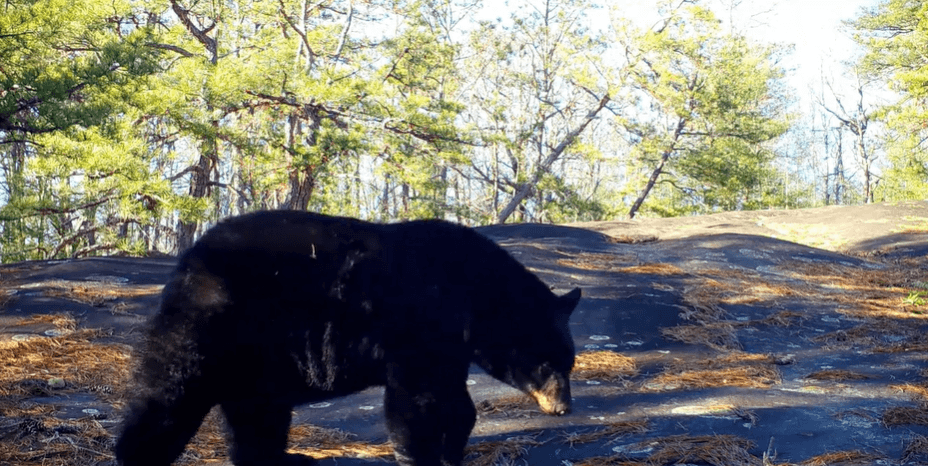
Rockside Forager
Black bears forage constantly, using their keen sense of smell to find food.
Strong, Smart, and Surprisingly Fast
Black bears combine strength with intelligence. They have large brains for their body size, excellent long-term memory, and strong navigation skills that help them remember seasonal food sources.
Their senses are equally impressive. Bears see in color, hear better than humans, and have an extraordinary sense of smell that is far stronger than even the best tracking dogs.
They are also more athletic than many people expect. Bears are good swimmers and fast runners, capable of speeds over 30 miles per hour for short distances.
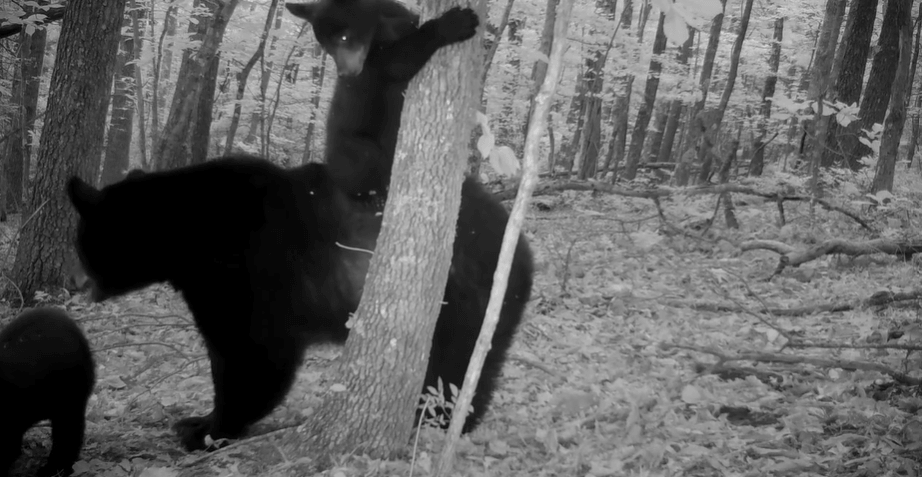
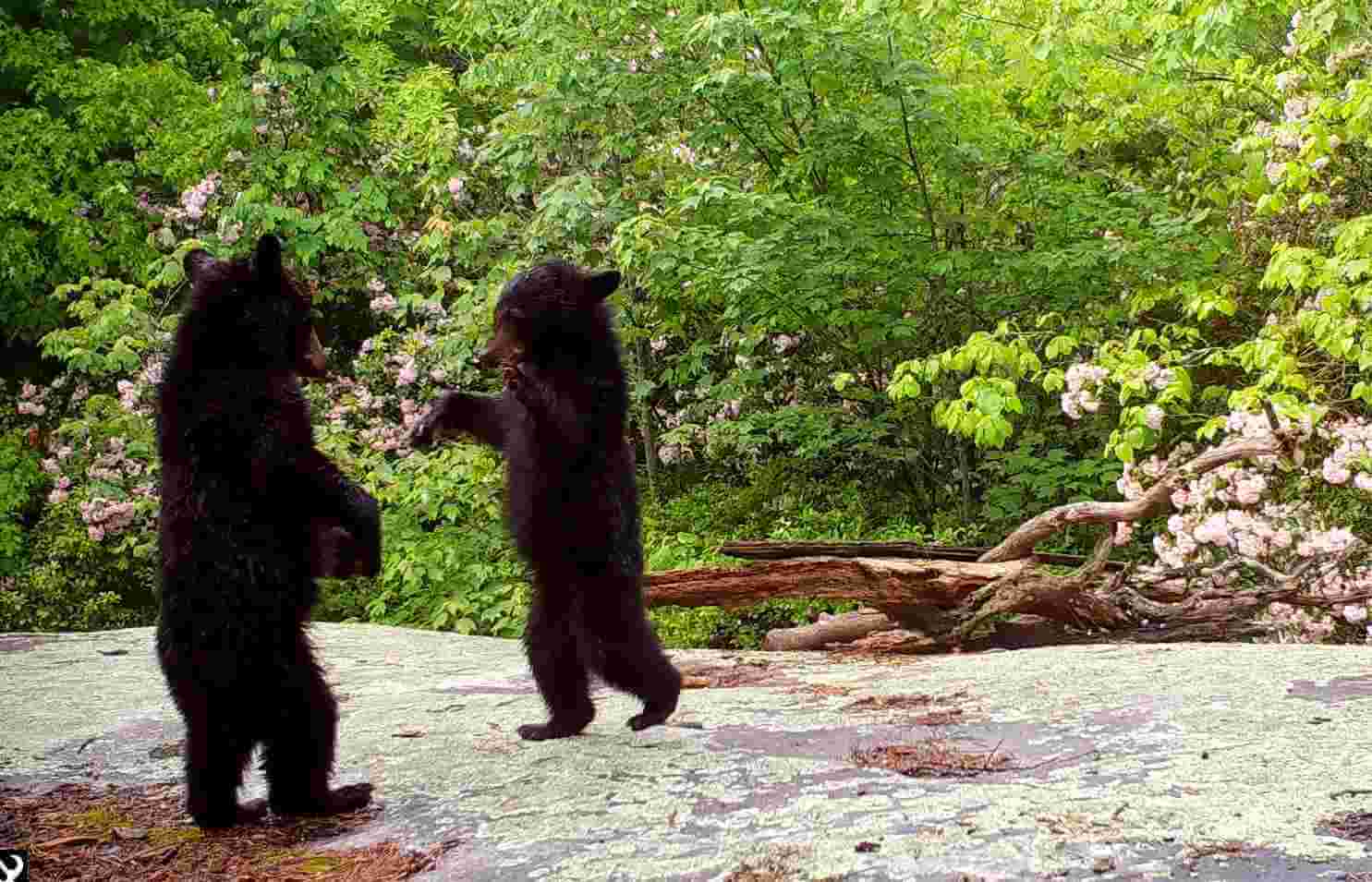
Following Mom’s lead
A mother black bear keeps a close eye on her cubs as they explore the forest together.
Mothers and Cubs
Cubs are usually born in mid-winter and are tiny at birth, only about the size of a small soda can. They grow quickly on their mother’s rich milk and begin exploring outside the den once they gain strength.
Young bears stay with their mother for about two years while they learn how to forage and survive. Although mother bears are protective, attacks on people in defense of cubs are extremely rare. In most cases, black bears choose retreat over confrontation.
Winter Slowdown, Not True Hibernation
Because winters here are relatively mild, local bears do not enter the deep hibernation seen in northern climates. Instead, they slow down and sleep more, using sheltered dens in hollow trees, logs, rock outcroppings, or thick cover.
They are light sleepers and may wake and move around during warmer winter periods.
Exploring Responsibly in Bear Country
Black bears have no natural predators here other than humans and vehicles, and they play an important role in maintaining a healthy forest ecosystem. In DuPont, bear hunting is not allowed, helping reduce disturbance and conflict.
The most important thing to remember is that a fed bear is a dead bear. When bears gain access to human food—whether from unsecured trash, pet food, coolers, or bird feeders—they can lose their natural wariness and become food-conditioned. Once that happens, they are more likely to approach people and developed areas, which often leads to dangerous outcomes for both bears and humans.

Content Provided By
Friends of DuPont Forest
About Friends of DuPont Forest
Friends of DuPont Forest is a nonprofit organization dedicated to protecting and enhancing the natural beauty and ecological health of DuPont State Recreational Forest. Through advocacy, volunteer efforts, and educational initiatives, they help maintain trails, preserve wildlife habitats, and ensure that future generations can continue to enjoy this treasured landscape.